
Humans have been gathering around heat for millennia.
In Finland, sauna culture is deeply embedded in everyday life. Russia and Eastern Europe have the banya. Turkey has the hammam. Jews have the schvitz. Native American communities have sweat lodges. Each has its own practices surrounding heat, steam, ritual, and communal bathing.
These traditions aren't identical. The rooms, temperatures, humidity, rituals, and cultural practices can be very different. But they share something fundamental: people have long valued intentionally spending time together in heat.
More recently, scientific research has begun to catch up with centuries of lived experience, finding associations between regular sauna use and a range of physical and mental health outcomes.
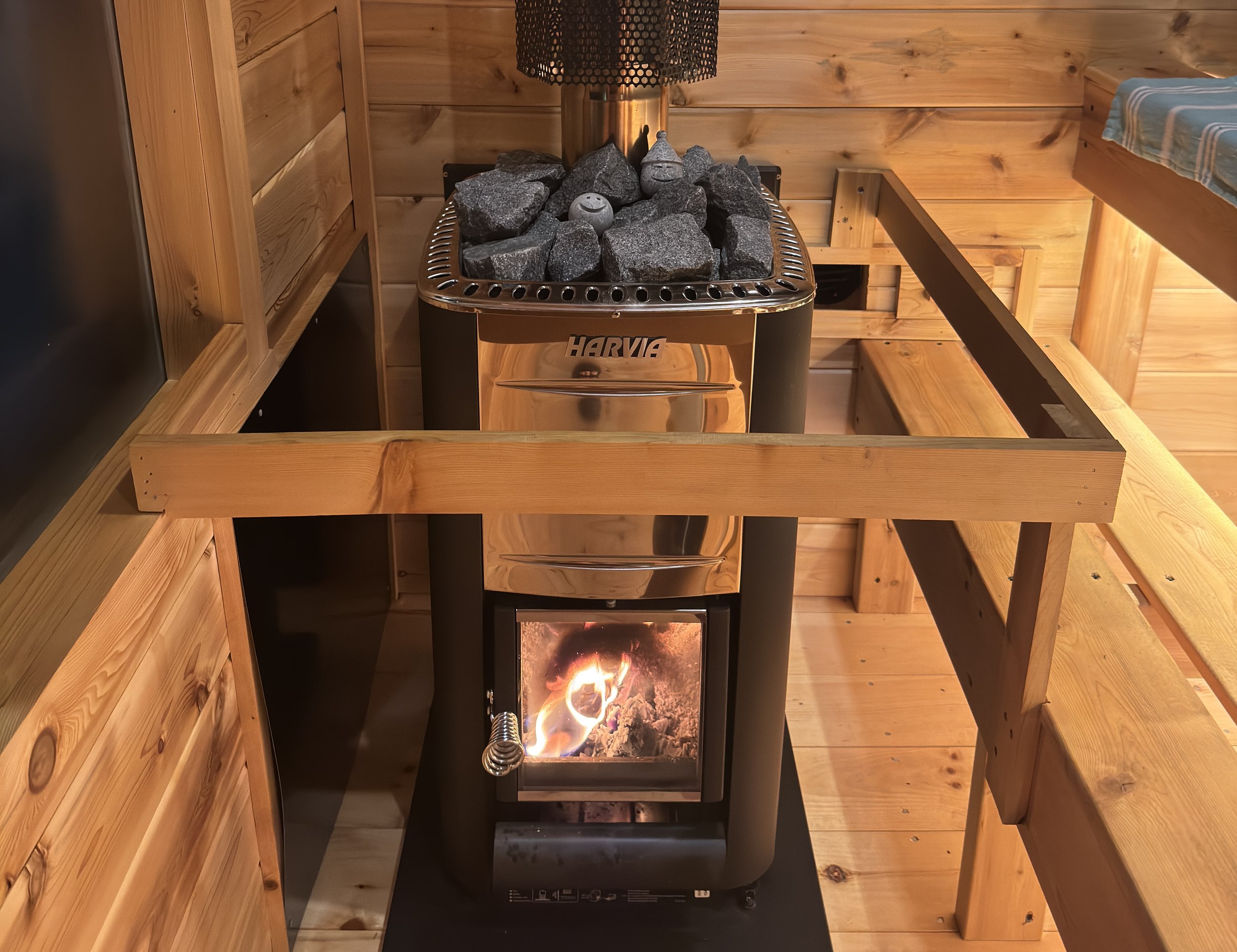
Wood fired sauna heater at The Sauna Standard.
What Does Scientific Research Say About the Benefits of Sauna?
Some of the most interesting research into the health benefits of sauna has come from Finland, where sauna is deeply embedded in the culture.
Cardiovascular health and longevity. A 2015 study published in JAMA Internal Medicine followed 2,315 middle-aged Finnish men for approximately 21 years. Researchers found that more frequent sauna bathing was associated with lower rates of fatal cardiovascular events and all-cause mortality. Men who reported using the sauna four to seven times per week had a 63% lower adjusted hazard of sudden cardiac death compared with those using it once weekly.
Blood pressure and hypertension. Heat exposure causes blood vessels near the skin to widen and changes circulation. A 2017 study published in the American Journal of Hypertension found that men who reported sauna bathing four to seven times weekly had approximately half the adjusted hazard of developing hypertension compared with those using it once weekly.
Dementia and Alzheimer's disease. A 2017 study published in Age and Ageing found that more frequent sauna bathing was associated with lower rates of dementia and Alzheimer's disease among Finnish men followed in this study for approximately two decades.
Exercise and endurance performance. A 2007 study published in the Journal of Science and Medicine in Sport found that six competitive male endurance athletes who incorporated post-exercise sauna sessions into their training over three weeks increased their time to exhaustion by 32% compared with a control period. Researchers estimated that this could translate to a 1.9% improvement in endurance time-trial performance and observed increases in blood volume that may help explain the results.
These findings are promising, but it's important not to overstate what the research tells us.
The cardiovascular, hypertension, and dementia studies cited above are observational. They identify associations between sauna use and health outcomes, rather than proving cause and effect. The exercise study was a small intervention involving just six male endurance athletes. Many of the best-known studies also focused on middle-aged Finnish men, so their findings may not apply equally to everyone.
Sauna isn't a substitute for regular exercise, sufficient sleep, good nutrition, or medical care. But the research suggests that regular sauna use may be a valuable addition to a healthy lifestyle.
I'll explore the research behind these individual health benefits in greater detail in future articles.
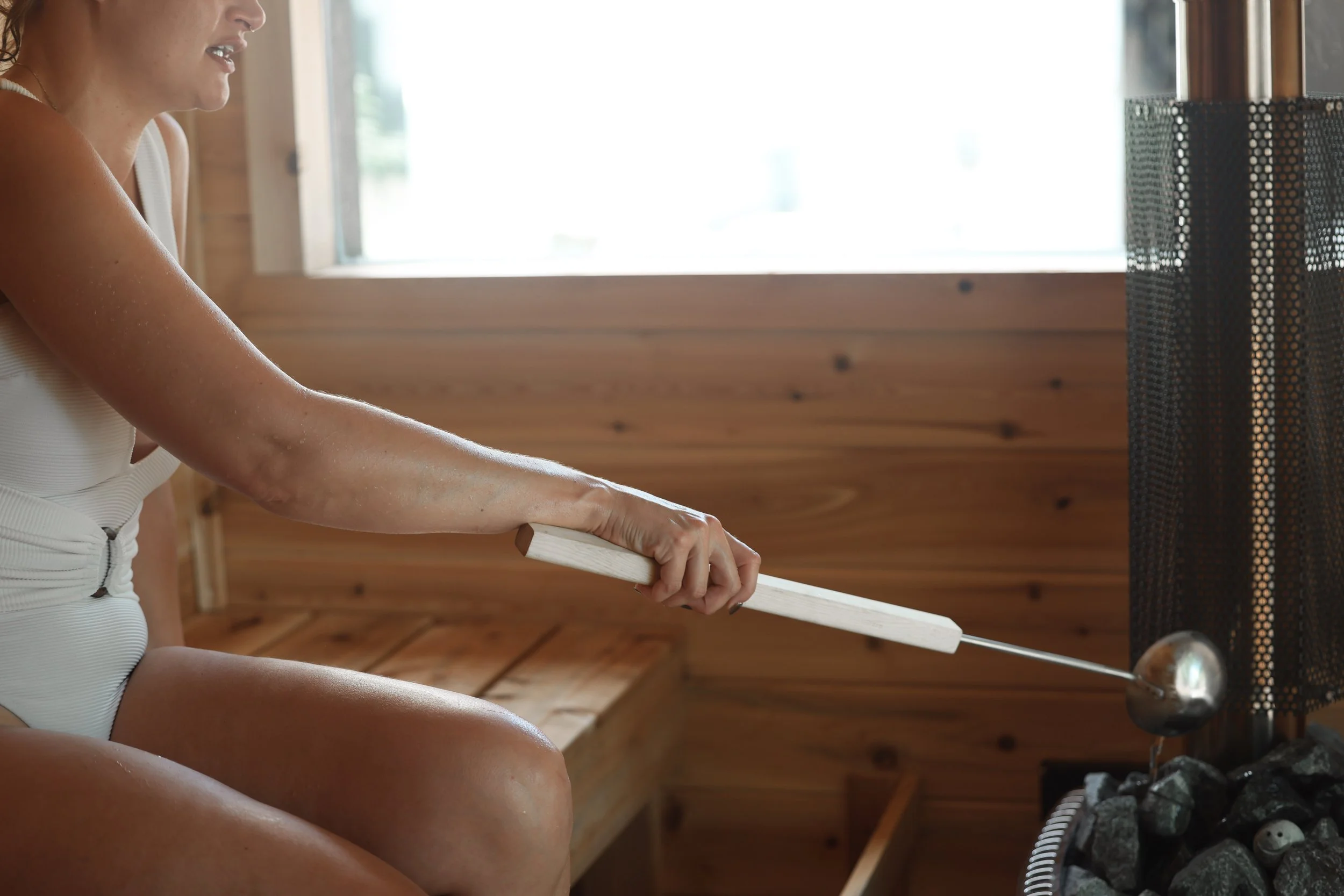
Pouring water on the sauna rocks to create steam (“Löyly” in Finnish).
My Own Experiences of the Mental and Social Benefits of Sauna
Not every benefit of sauna needs to be measured through heart rate or blood pressure.
One of the benefits I value most is also one of the hardest to measure: the opportunity to slow down.
When I step into a sauna, my phone stays outside. There's no screen, no inbox, and no task I'm supposed to complete.
There's just the heat, the water hitting the stones, the steam rising through the room, and the experience of being present.
Sauna can also create space for connection.
Whether you're sitting with your partner, family, friends, or someone you've just met, sauna offers something increasingly rare: uninterrupted time together.
You can just talk. Connect. Or simply enjoy the silence, together.
Sauna can be good for you—and it can also just be fun.

Enjoying sauna with new friends at Harvia headquarters in Muurame, Finland.
Making Sauna Part of Everyday Life
One theme in the sauna research particularly interests me: frequency.
Some Finnish studies have found stronger associations with favorable health outcomes among people who reported using sauna more frequently.
That doesn't mean more is always better, or that everyone needs to sauna every day.
But it reinforces something I've experienced during my own journey of taking 100 saunas in 2026: regular sauna becomes more than an occasional enjoyable experience. It becomes a ritual.
And when that ritual becomes part of everyday life, its value can extend well beyond the heat itself.
That's what inspired me to start The Sauna Standard: to make great sauna easier to experience and easier to make part of everyday life.
Because the best sauna is the one you actually use.
Experience the Benefits of Sauna at Home
The Sauna Standard makes it easy to enjoy authentic sauna right outside your door.
Whether you're looking for a private sauna rental for a weekend, a month, or an entire season, we bring the experience to you—so you can enjoy the heat, relaxation, and connection of sauna without leaving home.
Ready to make sauna a permanent part of your routine? We also offer custom sauna design and sales to help you create your own sauna experience at home.